
Generative engine optimization (GEO) transforms the content visibility to retrieval-based inclusion from ranking-based delivery. B2B teams that appear in AI-generated answers have left the SEO game to enter a different ranking logic and new content architecture.
Most B2B teams are responding to the declining organic traffic by increasing the content output, which AI does not retrieve, and this is the core problem. Content volume does not enhance retrieval scope, but the correct content, having the correct architecture for the right retrieval model, does.
As search becomes zero-click and conversational, the SEO logic breaks. AHREFS found in its 2025 analysis that compared conventional organic research, an AI overview reduces the clickthrough rate by 34.5%.
Knowing what GEO is really optimized for and how it is different from the SEO logic gives the foundation to address the issue.
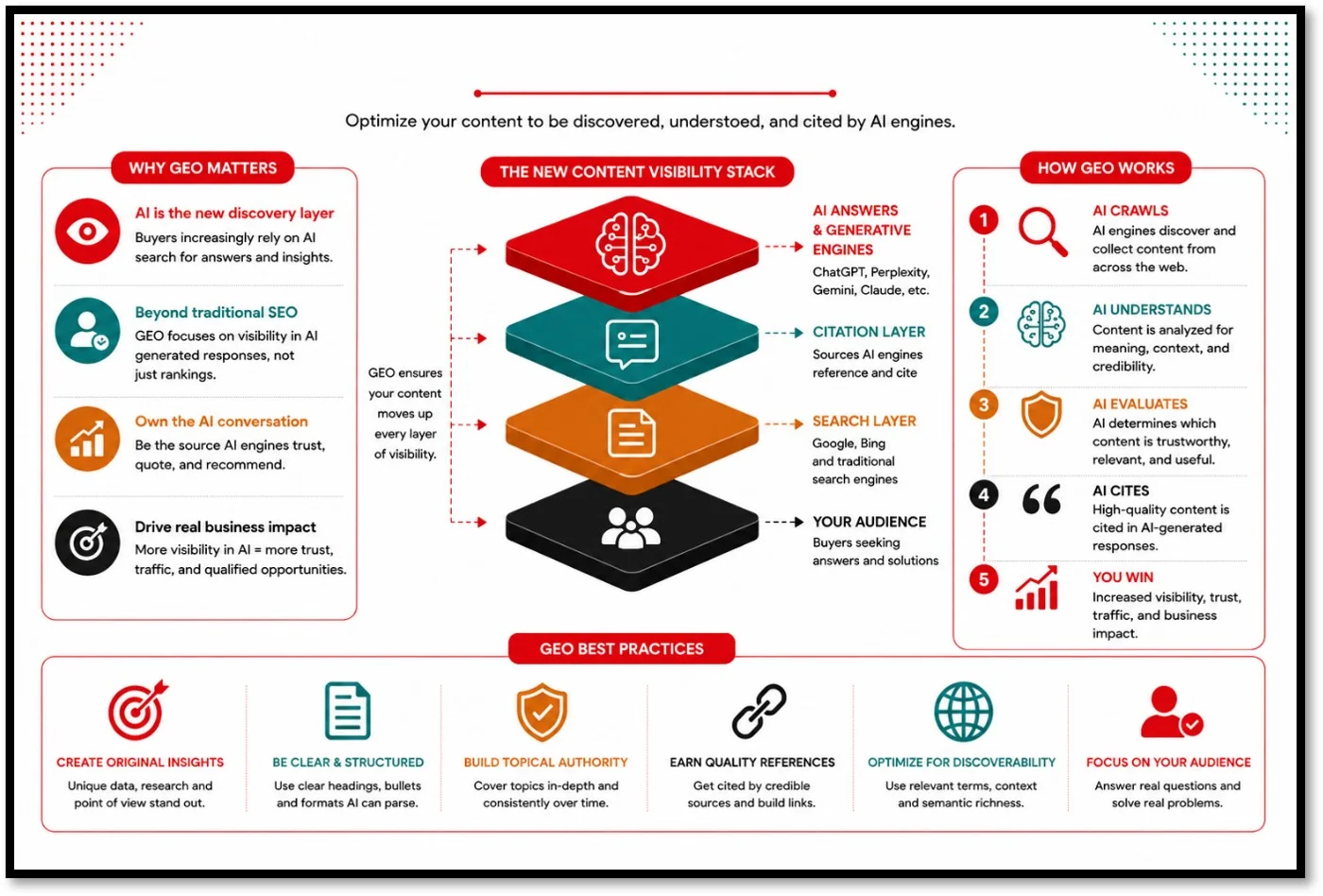
What Is Generative Engine Optimization in B2B and Why It Replaces the SEO Instinct
While the conventional search engine was optimized for ranked lists that humans navigate through, GEO focuses on synthesized answers that AI retrieves. Crawlability, backlinks, and keyword breadth are inputs that measure SEO ranking, while GEO rewards source credibility, retrieval clarity, and specificity.
Outputs also differ; where SEO determines the position of the webpage, LLM search optimization governs the company’s presence or absence inside an answer. The absence does not appear as a measurable loss in dashboards, and that is why B2B teams overlook the parameter.
AI retrieval models synthesize responses from credible sources and extract structured claims rather than evaluating the content in the way search engines do. B2B teams that believe declining traffic is an SEO excuse are addressing the incorrect mechanism.
How GEO is Changing B2B Content Strategy from Publication to Retrieval Architecture
The conventional content strategy was built around the publication model, which would develop assets, distribute these assets across paid and owned channels, downstream lead generation, and measure engagement and traffic.
GEO content strategy employs the retrieval architectural model, where all assets are woven around one answerable question, from which AI models can extract the claim. However, many AI models ignore the fact that broad topical coverage hampers retrievability.
The asset simultaneously answering multiple questions in depth generates ambiguous signals, whereas the asset directly answering one question with specific data and clear buyer implication removes the ambiguity. AI visibility depends on extraction clarity.
Why GEO Is Important for B2B Marketing Beyond Traffic
LLM models fail to retrieve data due to the recency, high-traffic, and high keyword density, and this is the authoritative argument that answer engine optimization (AEO) misses. They extract from sources the model considers credible, including academic-adjacent research, structured data that signals domain-level expertise, and analyst publications.
A B2B company establishing niche authority and frequently cited within a trusted vertical ecosystem creates more retrieval visibility than a high-traffic-generating competitor with weak citation authority.
Zero-click search has become an authority distribution problem rather than being a traffic problem. B2B teams that invest in GEO optimization techniques claim retrieval territory before the citation pool benefits early movers.
How to Build a GEO Strategy for B2B Companies that Generates Retrieval Over Rankings
A strong GEO implementation strategy reframes the content around questions instead of elaborating on topics. The ideal strategy designs every content asset around a high-intent buyer question, where it opens with the answer to that question.
AI models extract claims from this opening rather than retrieving answers from content built toward the conclusion. The inversion from the argument-first to the answer-first approach is the shift that most B2B teams miss.
Establishing the external citation infrastructure before publishing the new content is the subsequent step, where content assets are linked to credible external publications. The credibility of these publications determines the authority of the content.
Specificity via mentioning attributable claims throughout the content asset is another pillar of the strategy. AI models retrieve authentic claims having sources mentioned with appropriate buyer-relevant framing rather than extracting vague expertise.
More than being just a future investment, GEO strategies and AI visibility will favor those who accumulate citation credibility now. Retrieval readiness governs visibility instead of publishing frequency.
Final Thoughts: This is How to Optimize Content for Generative AI Search Engines Before the Window Closes
More than being a content issue, GEO in B2B marketing is a retrieval architectural problem. The architecture built today will decide whether B2B teams will be visible in 2027.
The right window to implement the GEO framework for B2B is now, and B2B companies that adapt early will become authoritative sources in the future. The future of SEO belongs to organizations that structure the right content for the correct retrieval models rather than prioritizing content volume.
Want to analyze where your current content architecture is? Contact Marketboats to develop a strategy to build citation authority and increase visibility in AI searches.
FAQs
1. How to get cited in AI search engines?
The key step is to develop authority through structured claims, external citations, and content designed to answer specific questions of buyers with retrieval-friendly content structuring.
2. How to rank in ChatGPT search results?
Prioritize retrieval clarity, semantic consistency, precise answers to specific questions, and trusted external mentions to rank in ChatGPT searches.
3. What are the best GEO practices for B2B marketing in 2026?
Building external authority, designing question-led content, developing retrieval-focused architecture, and providing specificity through structured answers are the best practices for GEO in 2026.