
Modern B2B buying networks improve supplier visibility, ensuring faster, data-backed purchasing decisions that help procurement teams reduce friction. Enterprises that achieve faster and more cost-efficient sourcing do so by embedding evaluation data, shortening decision windows, and surfacing pre-vetted suppliers.
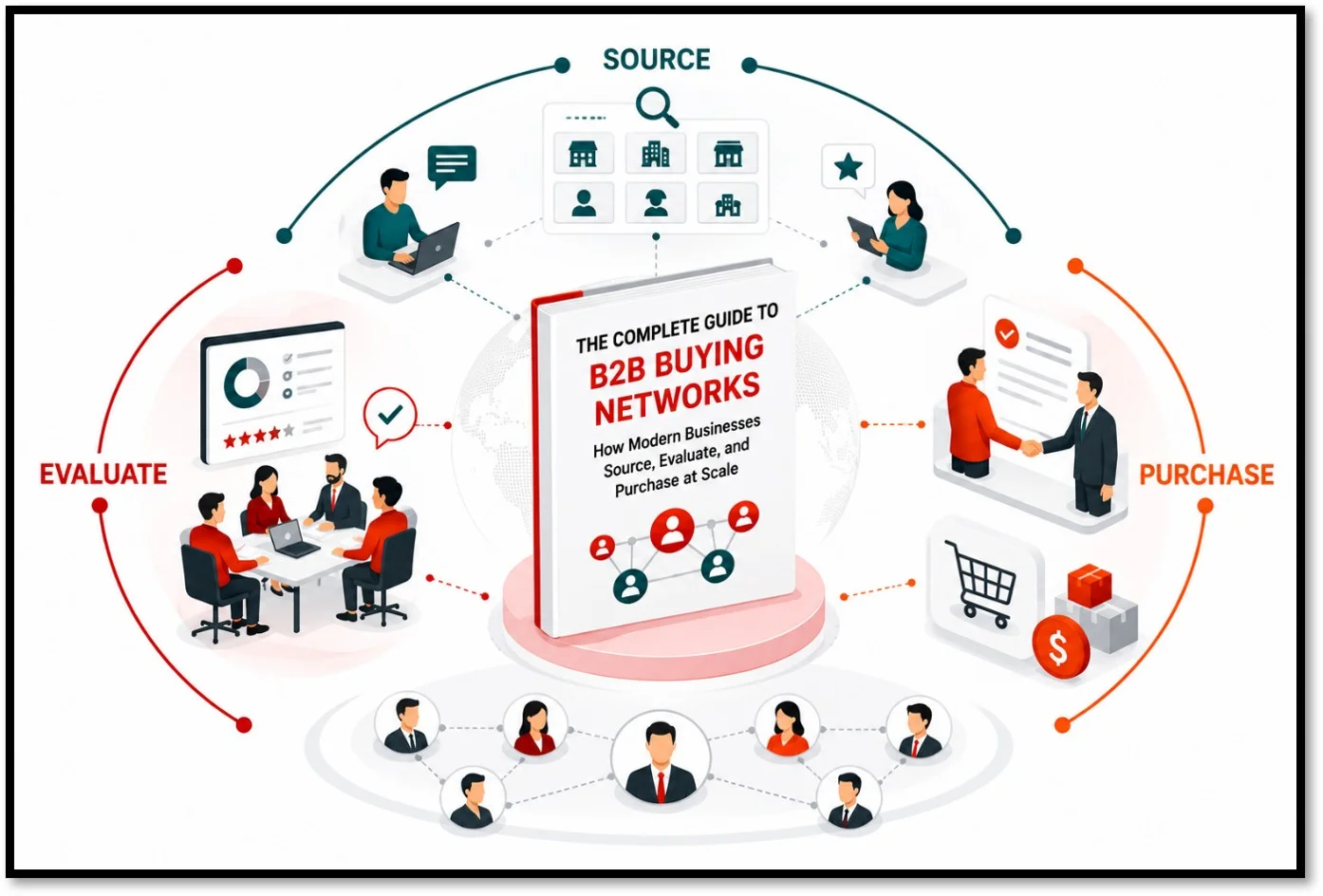
Conventional procurement models were designed for scarcity, where switching costs were high. Many B2B teams optimize for manual or linear sourcing processes, which tax them for speed and cost.
Procurement Tactics’ research finds that 80% of B2B enterprises have employed digital transformation in procurement, while the rest 20% still favor conventional systems. Despite these numbers, the future of procurement is beyond automation, with supplier intelligence playing a key role.
What Are B2B Buying Networks, and How Are They Different
A buying network in B2B is a connected ecosystem where suppliers and buyers interact to evaluate, transact, and nurture relationships within a digital environment that carries credible performance data about each stakeholder. They also reduce information asymmetry between buyers and suppliers.
The distinction between buying networks and digital procurement networks arises based on the commercial value they bring in. While buying networks expand supplier possibilities by surfacing vendors that buyers would not have discovered otherwise, procurement platforms automate existing workflows.
Most B2B teams, despite having procurement software, operate slowly, and the real bottleneck arises due to supplier discovery and evaluation intelligence instead of workflow. While procurement platforms solve the first issue, buying networks address the latter.
Why Traditional Procurement Models Are Changing
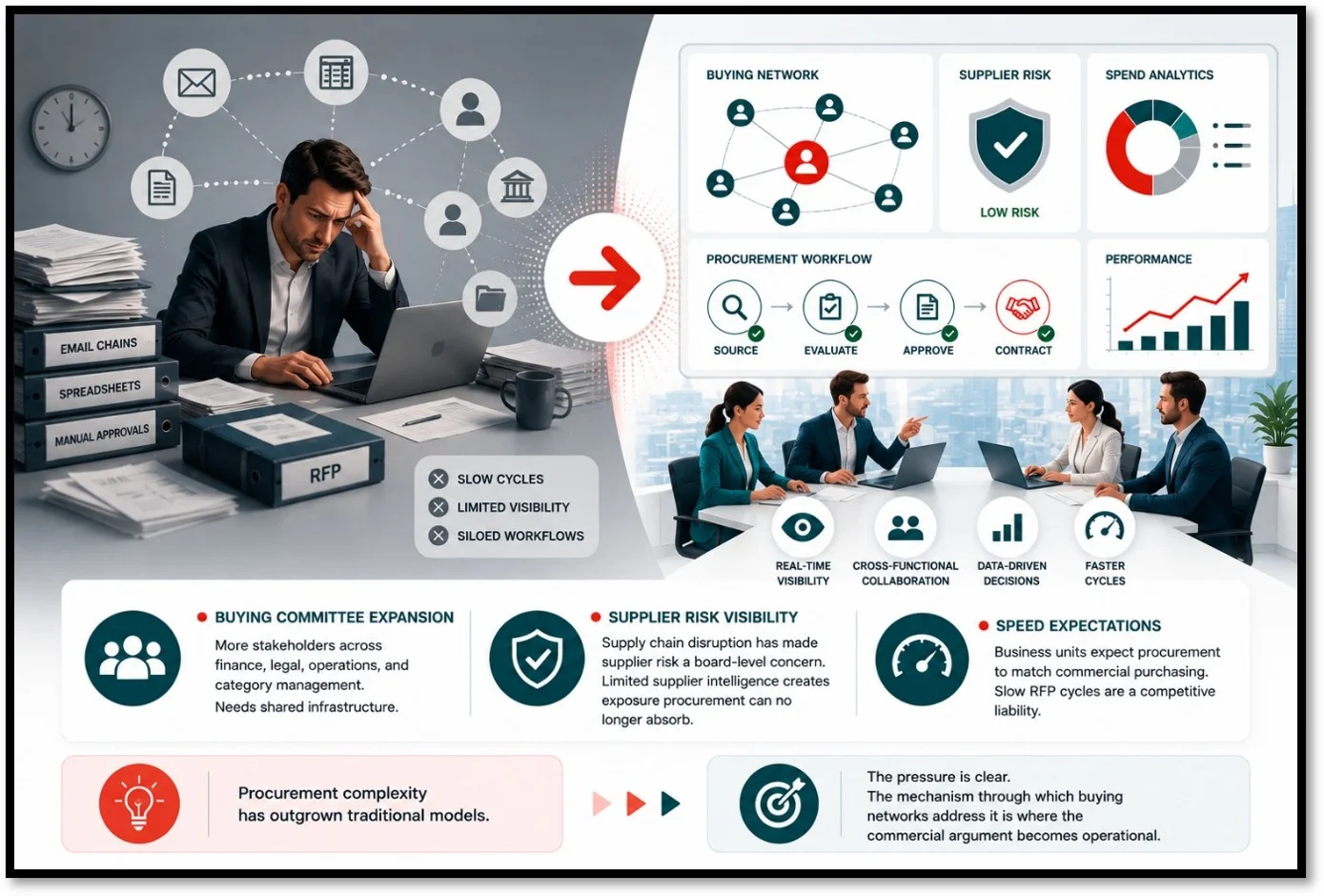
Traditional procurement was optimized for commercial environments, where buying cycles were slow, and information asymmetry was a protective shield for incumbent suppliers. Each of these structural advantages has been inverted.
Here are three structural elements that shift from traditional to digital procurement-
- Expanding the Buying Committee: The number of stakeholders in a decision-making committee is increasing across operations, category management, and legal departments. Beyond procurement discipline, procurement architecture is the central problem in coordinating across these functions via email chains.
- Supplier Risk Visibility: Supplier risk management has become a board-level exposure, owing to supply chain disruptions. Procurement teams fail to cope with the exposure that traditional procurement’s limited supplier intelligence creates.
- Speed Expectations: B2B enterprises expect procurement cycles to proceed at a pace of commercial purchasing decisions. Longer RFP cycles have become a competitive liability, as procurement complexity has superseded traditional models.
How B2B Buying Networks Work from Supplier Discovery to Evaluation and Award
The commercial value of B2B purchasing platforms becomes more evident when viewed through the lens of the sourcing lifecycle. Extending the impact beyond technological adoption, it represents a shift in procurement decisions’ execution.
Stage 1: Supplier Discovery Platforms
These platforms surface pre-vetted suppliers by matching their capability profile and geography with buyers’ categories. Cold outreach and manual supplier research are significantly reduced, as suppliers are chosen from a validated and qualified pool.
Saleslion’s 2025 analysis finds that 77% of B2B buyers carry out independent research before contacting a vendor. Buying networks target buyers with verified supplier data at different buying stages, instead of approaching them with aggregated, unverified information.
Stage 2: Evaluation
Supplier intelligence, including performance history, peer review data, and compliance status, becomes more influential than buyer-generated evaluation inputs. Evaluation built on verified data is faster and more reliable than an RFI process, which depends on the supplier’s self-reported capabilities.
Stage 3: Award and Supplier Onboarding
The network offers onboarding infrastructure once the supplier is selected, which cuts down the time-to-active-contract.
B2B buyers, at every stage, shift from operating on raw data to functioning with curated intelligence, which is a common pattern across every stage. It compresses procurement timelines to reduce the scope of poor selection by improving information accessibility.
What Are the Key Benefits for Procurement Teams, and Which of Them Is Overstated
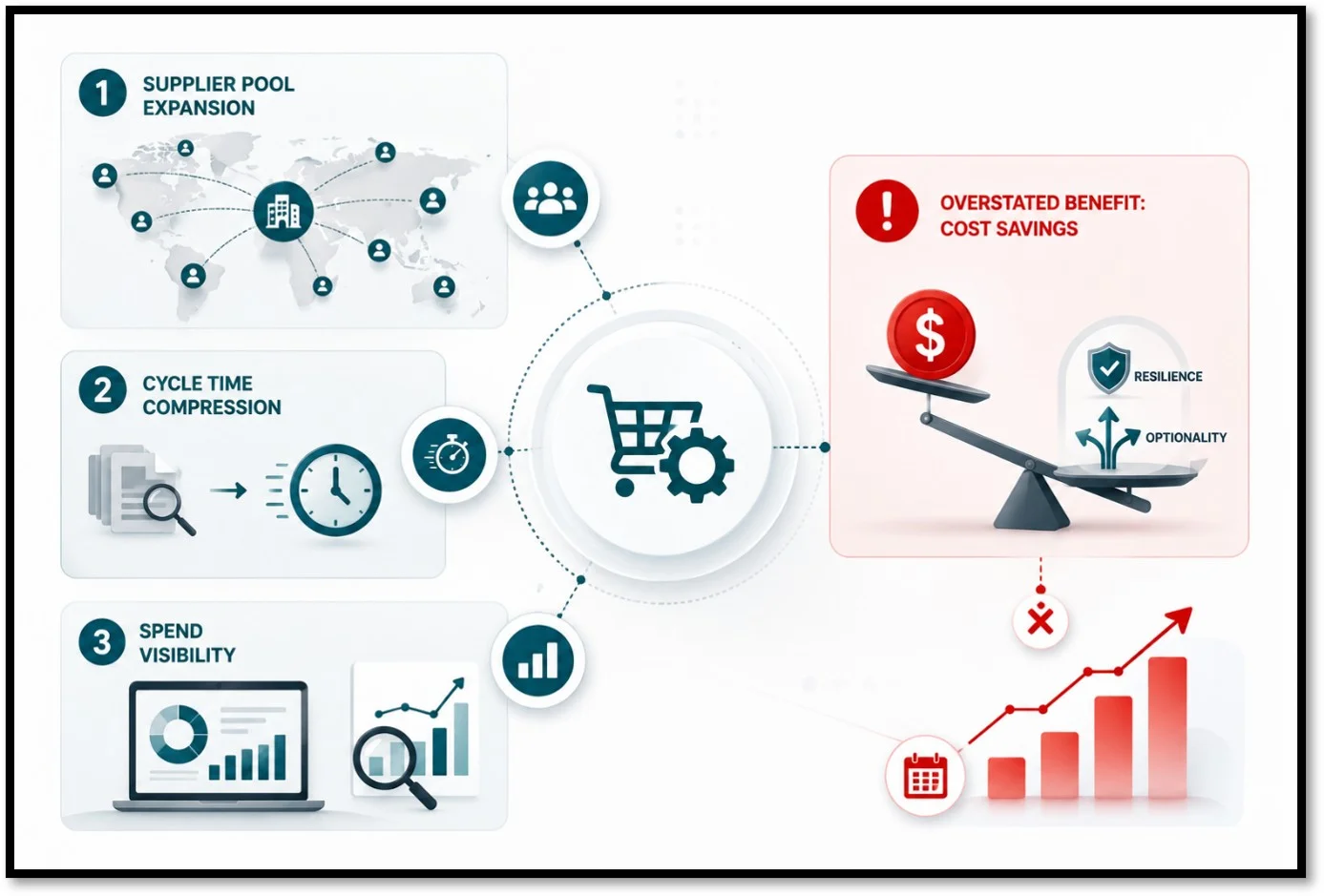
Buying network implementations often lose organizational support before benefits fully materialize because expectations are frequently overstated. Here are three genuine benefits that stand out-
- Expansion of Supplier Pool: Accessing a validated supplier ecosystem, apart from the existing contacts, reduces the dependency on a single source, which enhances competitive tension in sourcing events.
- Compression of Cycle Time: Buying networks reduce manual efforts for preliminary evaluation and supplier discovery, which accelerates sourcing activities.
- Visibility in Spend Management: Consolidating purchasing activities and supplier interactions, buying networks generate spend analytics that manual procurement cannot produce. Sourcing effectiveness, supplier utilization rate, category performance, and spending concentration are the factors that procurement leaders gain visibility into.
The discussion around buying networks often begins and ends with cost savings, but the framing is an understatement for their strategic value, and it is the benefit that matters the least. Enterprises that build on immediate cost reduction without developing their sourcing strategy around it will fail.
What Is the Role of AI and Data in Supplier Discovery
The discussion around procurement technology often becomes abstract, but in reality, the value of AI depends on how effectively it enhances sourcing decisions. Here is how AI transforms supplier discovery:
| AI Changes Supplier Discovery Via | What Changes |
|---|---|
| Supplier Matching | Depending on the category fit, capacity, past performance signals, and geography, AI models surface supplier options. The process compresses from weeks to a few hours, and matching value is a priority over gaining speed. |
| Risk Scoring | AI produces a risk score through the aggregation of regulatory compliance status, supply chain concentration data, market signals, and financial stability indicators. It informs selection decisions before starting due diligence. |
| Predictive Performance | Networks holding transaction history identify supplier outcome patterns across comparable buyer profiles and categories. |
Boston Consulting Group’s research finds that AI-deployed value chains can save up to 15% costs depending on the category.
The network’s data density determines the effectiveness of AI supplier discovery. A dense, AI-integrated, feature-oriented network generates different strategic sourcing solutions than a thin, AI-featured network acting as a search bar.
Which Are the Key Metrics That Define Success
Most B2B enterprises under-measure decision quality by over-measuring savings. Here are five broad procurement workflow KPIs reflecting the value of buying networks critically and accurately:
- Reducing Sourcing Cycle Time: It is the most immediate and easily measurable indicator of network impact across categories.
- Supplier Pool Diversity Index: It measures competitive tension by tracking how many qualified suppliers are available within each category.
- Competitive Tension Rate: It is a structural condition monitoring the share of sourcing events with three or more qualified bidders.
- Supplier Risk Incident Rate: It compares the frequency of supply disruptions between pre-network baseline and network-sourced suppliers.
- First-year Contract Compliance Rate: It measures the share of contracts that ensured supplier performance meets agreed terms in the first calendar year.
How to Choose the Right Buying Network
Most B2B teams evaluate buying networks based on platform integration capability, pricing model, and supplier breadth; however, they skip two additional metrics, including network data density and governance model.
While network data density determines the quality of AI suggestions and performance benchmarks, governance models control the exposure risk a buyer absorbs from network-sourced suppliers.
A platform produces a weak sourcing decision when it covers a broad supplier pool with a thin transaction history. Moreover, a larger supplier sourcing platform might not deliver the optimum outcome.
The commercial decision is often the collective effort of data density and governance because the two metrics describe the network’s worth after signing the contract.
What Are the Future Trends in B2B Procurement
Enterprises integrating modern B2B sourcing technology with strategic judgement will succeed. Network consolidation is an emerging trend where the market will shift from fragmented platforms to denser networks, which will combine broad geographic coverage with deep category specialization.
PwC’s Digital Procurement Survey finds that procurement departments aim to digitize their procurement processes by 70% by 2027, driving more investments in the field.
Embedded finance compresses the purchase-to-pay cycle to a few days, while ESG and regulatory compliance intelligence will shift the verification process from due diligence to a real-time network signal.
Final Thoughts: How Benefits of Digital Procurement Platforms Redefine B2B Buying Network
The strategic procurement function that will offer a competitive advantage in the future will be the one that operates inside the most intelligence-rich buying network in the category.
More than a stronger negotiation capability, access to supplier intelligence offers a sustained procurement advantage. Network-oriented procurement frameworks develop better resilience than fragmented sourcing systems, and B2B teams will get this edge in the future.
Want to know where your current sourcing architecture falls short? Marketboats will help you develop tailored sourcing solutions that generate an immediate sourcing impact.
FAQs
1. How do buying networks help procurement teams?
Procurement teams can take informed decisions, as buying networks bolster supplier intelligence, improve supplier discovery, and accelerate sourcing cycles.
2. What are the benefits of digital procurement?
Benefits of digital procurement include improved sourcing efficiency, enhanced spend visibility, stronger governance across different procurement activities, and expanded supplier access.
3. How can AI improve supplier discovery?
AI can evaluate historical performance indicators, operational capabilities, supplier characteristics, and compliance signals. As a result, it can produce a more accurate list of suppliers that aligns more closely with organizational requirements.
4. What is the difference between procurement platforms and marketplaces?
While procurement platforms optimize for internal purchasing workflows, marketplaces ensure seamless transactions between buyers and sellers. On the other hand, buying networks stretch beyond supplier intelligence, evaluation support, and relationship development.
5. What metrics should procurement teams track?
In terms of tracking the progress, B2B teams should monitor first-year contract compliance rates, supplier pool diversity, supplier risk incidents, and competitive tension rates.