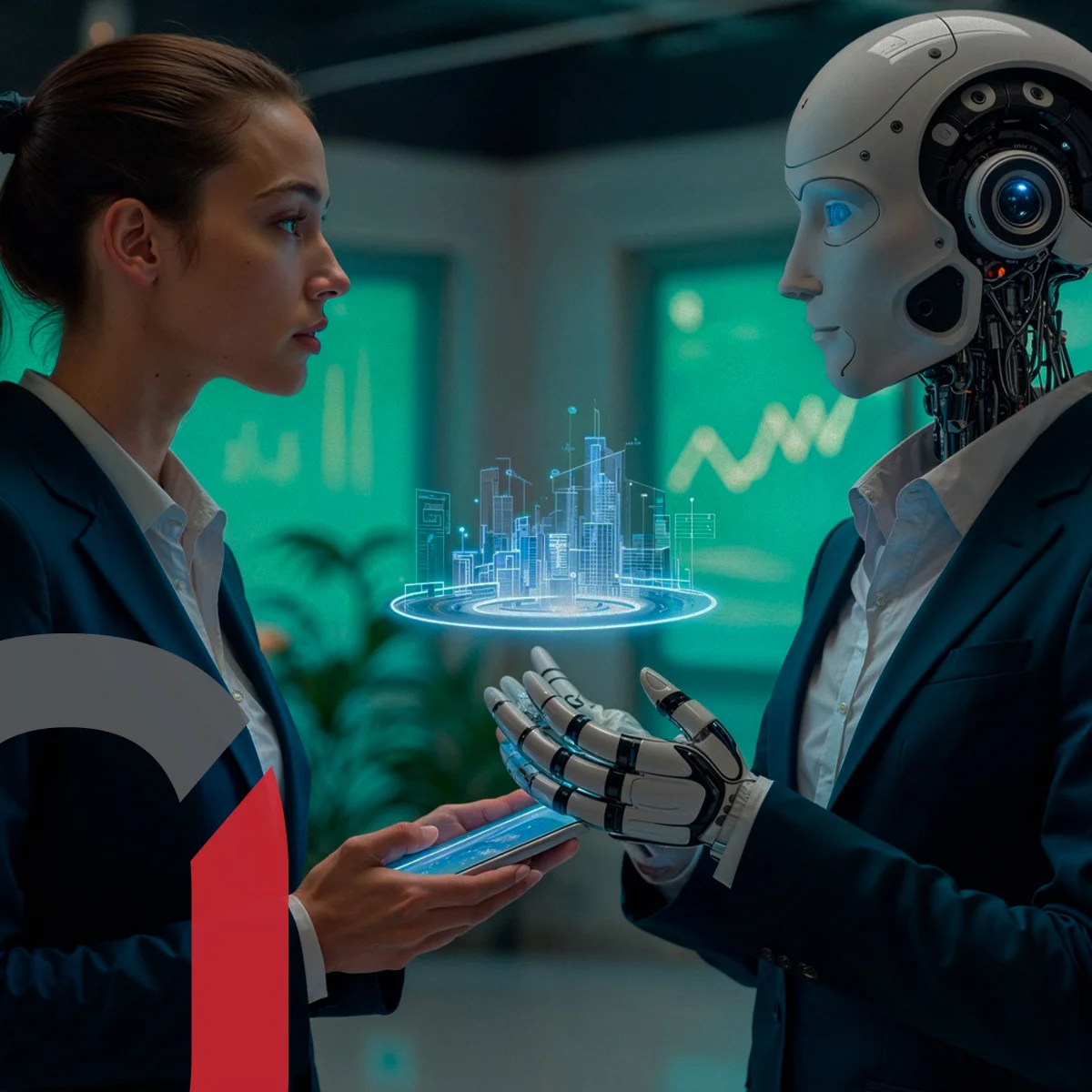
Consider two scenarios for a company:
In the first scenario, the company emphasizes marketing campaign automation. It integrates AI into lead nurturing and relies on chatbots for responding to prospects. But buyers complain that responses sound robotic. Eventually, email open rates drop. Result? A failed marketing campaign.
In the second case, the sales team is overwhelmed with manual lead nurturing. It focuses solely on human-centric strategy development. But the number of leads drops, the team is under pressure, and revenue drops sharply.
Result? An unsuccessful campaign.
Both these cases create pain points in the B2B domain. B2B lead nurturing works best when AI automation is combined with human insight.
The correct balance of these strategies will help you to not only meet your buyers where they are but also push them forward along the funnel. According to Gitnux’s 2026 report, about 71% of buyers are inclined toward educational content like whitepapers. A hybrid approach helps companies adapt to this shift.
Why Lead Nurturing Needs Both Human Touch and AI?
What Is Modern Lead Nurturing?
Lead nurturing helps B2B organizations build meaningful relationships with buyers before any sales conversion. Practically, the process relies on three pillars:
- Educating prospects about their pain points or challenges.
- Responding to behavioral signals at the right time to deliver the right message.
- Building trust that ensures natural sales conversion.
Modern buyers form their opinions independently through extensive research. They actively look for solutions, even before the sales team reaches out to them.
AI Automation in Lead Nurturing
AI automation offers a modern approach. It is beneficial in simultaneously analyzing numerous behavioral signals and patterns, including pricing page visits, which humans can easily miss. As a result, automatic outreach triggering becomes feasible. It includes email sequences, chatbot conversations, and recommendations of relevant content.
Without increasing manual workload, companies ensure scalability. AI-driven lead nurturing systems analyze content consumption, email engagement, and website activity to check which leads reflect higher buying intent.
Behavioral lead scoring helps companies segregate early-stage prospects from high-intent buyers. Here, intent data analysis plays a pivotal role. According to Madison Logic’s report, 49% B2B marketers prioritize leads using high-intent data.
Why Does an AI-only Approach Fall Short?
The AI-only approach creates generic outreach, and it is easily recognizable. It leads to a drastic decline in email open rates and lead conversion rates, and stagnated reply rates.
Organizations gain buyers’ trust through thought leadership. Generic outreach through AI does not deliver a distinct thought. According to the ColumnContent’s 2025 report, 60% of decision-makers claim that thought leadership content has awarded them business.
Where Does the Human-only Approach Struggle?
The human-only approach struggles with scalability. Humans can provide only one aspect at a time- either speed or reach. The modern B2B domain demands both simultaneously.
At this point, the hybrid model comes into the picture, which caters to both requirements. It offers machine processing for data-driven nurturing, along with human insight.
Human + AI Lead Nurturing Model
The hybrid model of lead nurturing ensures strength-based task allotment. It’s a systematic handoff, not a perfect split. Machine learning in lead nurturing helps you forecast opportunities. Humans can capitalize on them. While AI eliminates the friction in repetitive work, humans bring judgment to make decisions.
| Function | AI’s Responsibility | Humans’ Responsibility |
|---|---|---|
| Behavioral Signals | AI-integrated systems can identify behavioral patterns that humans might miss due to volumes. | Humans interpret behavioral intent and align it with buyers. |
| Lead Scoring | It automates lead scoring based on engagement data. | People validate and review scoring for high-value accounts. |
| Data Processing | AI can handle thousands of contacts simultaneously.
Chatbots provide data on initial engagement, indicating buyers’ interest. |
They can refine targets based on insights. |
| Automation Triggers | It ensures that no leads fall through cracks. | Based on campaign goals and performance, humans can adjust workflows. |
| Messaging Tone | AI can create a generic communication framework. | Humans can easily adhere to the brand voice and tone. |
| Personalization | Dynamic content insertion is possible in real-time, based on behavioral signals like email opens and clicks. | Humans adapt messaging based on the interpretation of behavioral signals such as email engagement and repeated website visits. |
| Strategic Decisions | AI offers data-driven suggestions, consolidating human decisions. | Based on the judgment of lead engagement by virtue of experience, humans can take strategic actions, like altering messaging, changing tone, etc. |
| Complex Buyer Interactions | AI flags high-risk and high-intent leads. | Humans cater to negotiations, nuanced buyer conversions, and objections. |
But, how to balance human insight and AI automation in lead nurturing?
AI recognizes buyer activity, such as pricing page visits and repeated webpage visits. Based on the engagement, AI assigns lead scores. High-intent prospects are reached through automation triggering.
Humans collaborate with AI at this point, where they personalize key touchpoints and adjust messaging tone. Along with AI, they manage complex buyer interactions. Lastly, the sales team engages qualified leads.
Challenges in Hybrid Lead Nurturing Strategies
Hybrid lead nurturing often faces four major barriers.
- AI Accuracy and Data Quality: Remember, using AI does not guarantee quality. It is only as good as the data fed to the system. Data contamination affects lead scoring. Indeed, the challenge is manageable; you will require high discipline in data management.
- Authenticity in Automated Messages: You cannot sound robotic and generic. B2B audience prioritizes authenticity and personalization. AI is not the final product. Treat it as a first draft. Human involvement will induce specificity and voice to your messaging. It will cater to authenticity as well as personalization.
- Marketing and Sales Misalignment: The sales team might refuse automation due to a lack of faith in the lead quality. This misalignment disrupts the sales & marketing alignment. A proper feedback loop between teams will restore this. Structuring reasons while rejecting leads and updating AI models when the marketing team observes patterns will establish this loop.
- Integration Complexity and Tool Overload: Lack of synchronization in AI marketing automation tools makes human intervention constant firefighting. You need to adopt integrated platforms and avoid tool sprawl to address this hurdle.
Best Practices for Lead Nurturing that Actually Converts in 2026
- Combine Automation with Human Review: If you are aiming to succeed in the competition, never solely rely on AI. Always review the AI-generated content and include humans in strategic decision-making.
- Use Behavioral Data for Personalization: Engagement velocity should be your priority over demographics. Through 2026, personalization will fetch you more revenue. NEXTANT quotes Gartner’s analysis in its 2025 report, stating that personalization increases revenue by up to 15%.
- Align Marketing Automation with Sales Insights: Adjust your AI model when your sales team observes decreasing lead quality. Don’t blame them on numbers. Instead, investigate causes. Observe engagement anomalies and refine your brand messaging and tone.
Designing Your Lead Nurturing Strategy
This is how an ideal practice for balancing AI and human touch in marketing will look for you:
Firstly, integrate AI segmentation with a human messaging strategy. After recognizing segments using behavioral data, use human insights to tweak the messaging for tonality and personalization. Review automated campaigns regularly, say, per week. Lastly, align sales and marketing insights.
Here is how you can implement this strategy step-by-step:
Step 1: Define Lead Nurturing Objectives and Buyer Personas
Clearly define what conversions mean to your company. You need to know who you are reaching out to. This clarity will drive your every subsequent decision. For instance, if you are looking out for HR managers in the B2B domain for your CRM software, your targeting and segmentation will only pertain to their ICP.
Step 2: Implement AI-driven Lead Nurturing Infrastructure
Start deploying scoring, cleanly integrated automation platforms, and segmentation. This infrastructure will develop a foundation for the latter processes. In the same example, you can scale your campaign across a larger geographical region and reach out to decision-makers who are showing interest in your software.
Step 3: Layer Human Insights at Crucial Touchpoints
Analyze where you need human insights. Wherever humans can change outcomes for you, let them take over. A pro tip: You can involve your people during the first outreach, objection handling, and sales handoff.
Step 4: Develop Omnichannel Lead Nurturing Sequences
Coordinate between your social, web, and email channels for unified and consistent messaging. Orchestrate all channels so that they reinforce each other. This will accelerate the conversation for you.
Tools That Enable AI-Assisted Lead Nurturing
Here are some curated tools for you-
HubSpot: It manages AI-powered lead scoring, automates lead nurturing workflows, and manages CRM integration. It also provides end-to-end marketing automation solutions.
Salesforce Einstein: It offers predictive lead nurturing, AI-driven funnel insights, and enterprise-scale implementations. Best for large-scale data analysis and lead scoring.
Drift: It provides real-time lead engagement and conversational marketing. Without human involvement, chatbots instantly qualify leads.
Wrapping up
Nurturing leads with higher conversion potential needs human involvement beyond AI automation. The human touch in customer engagement is equally important as the dependence on artificial intelligence.
Modern B2B practices will depend on the human + AI approach, and its benefits will eventually compound. The workflow becomes responsive with improved data quality. The conversion rate also follows.
Remember, you will leave some revenue on the table if your lead nurturing strategy does not integrate AI-driven marketing automation and human insights and balance them both.
This balance, however, can be different for every company. You can book a free 30-minute strategic audit with Marketboats to check if your lead nurturing strategy offers you this balance.
FAQs
1. What are the benefits of combining AI and human touch for lead nurturing?
The combination of human insight and AI enhances lead nurturing through personalization and scalability balance. While AI automates outreach by evaluating behavioral data, humans make strategic decisions, build trust, and refine messaging. It improves conversion rate and engagement.
2. How to balance human insight and AI automation in lead nurturing for better B2B conversions?
Strength-based allocation is one way to attain balance. AI manages behavioral analysis, trigger automation, and lead scoring. People make smart choices and customize important touchpoints. Maintaining this balance will be made easier with strict data governance, weekly campaign reviews, and a feedback loop between the marketing and sales teams.
3. How does lead nurturing personalization with AI and humans differ from fully automated approaches?
AI handles scalability. Human involvement induces specificity and voice to the organizational messaging. AI can create a broad pipeline of prospects, and humans can personalize to catalyze the conversion rate.
4. What are the best tools for balancing AI and human lead nurturing strategies?
HubSpot, Salesforce Einstein, and Drift are some of the best tools for balancing AI and human lead nurturing strategies.
5. What is the best practice for lead nurturing that actually converts in 2026?
The best practice for lead nurturing in 2026 follows the following path: It combines automation with human review. Then, uses behavioral data for personalization. Lastly, it aligns marketing automation with sales insights.